
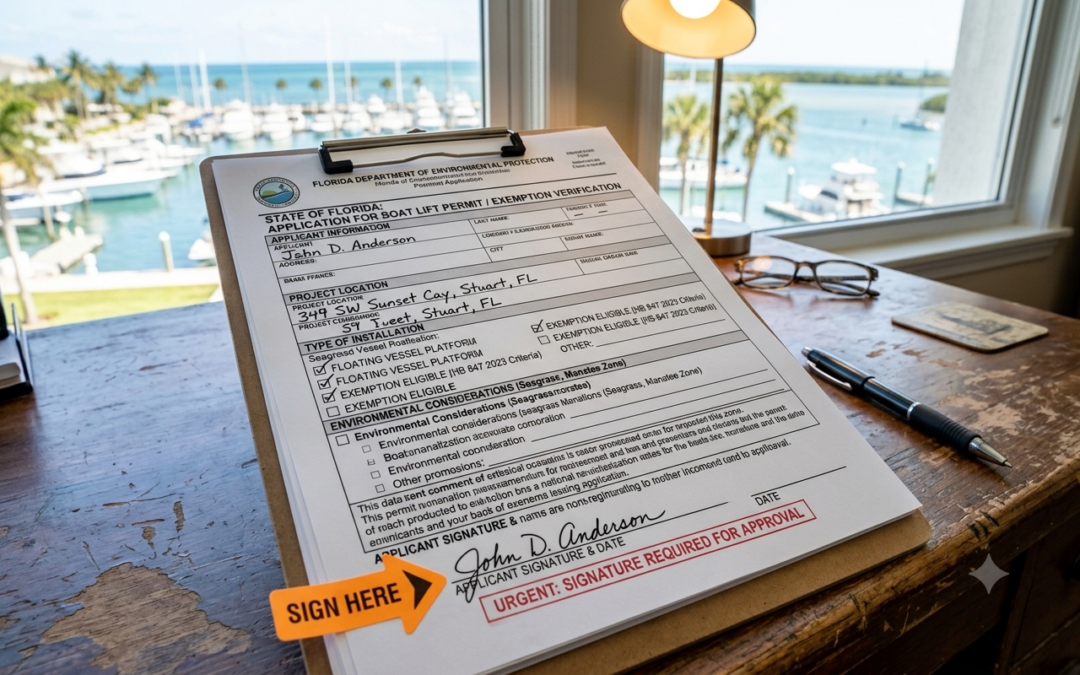
Florida Boat Lift Regulations: Navigating Permit Exemptions
Navigating the legal paperwork required to modify a backyard dock or a luxury marina slip can be an absolute nightmare for coastal homeowners. Between local building departments, county environmental resources, and the Florida Department of Environmental Protection (FDEP), getting approval for a traditional marine installation often takes months of expensive engineering and waiting. Therefore, staying informed on changing florida boat lift regulations is crucial if you want to avoid costly fines or prolonged project delays.
Fortunately, recent legislative updates have created a massive silver lining for Sunshine State boaters and florida boat lift regulations. Specifically, Florida’s House Bill 847 (HB 847) explicitly expands environmental permitting exemptions for floating vessel platforms. This law fundamentally changes the math for property owners by cutting right through the standard bureaucratic red tape.
The Permit Nightmare of Traditional Lifts
If you choose to install a traditional pile-mounted lift, you are stepping right into a regulatory minefield. Because these systems require driving heavy wood or concrete pilings deep into the seabed, they are classified as permanent structural modifications to sovereign submerged lands. Consequently, regulators must meticulously review your property for underwater seagrass beds, protected shellfish areas, and manatee travel corridors before they grant you permission to build.
If an inspector finds even a small patch of seagrass near your slip, your permit application can be delayed for months, forced into expensive redesigns, or flat-out denied. Furthermore, you are on the hook for thousands of dollars in marine engineering stamps, environmental surveys, and municipal filing fees just to get the project off the ground.
The Floating Vessel Platform Exemption Loophole
In contrast, the updated florida boat lift regulations offer an intentional, state-protected shortcut for floating systems that meet specific environmental criteria. Under Florida Statute 403.813, qualifying floating vessel platforms that float at all times and do not disturb the benthic floor are entirely exempt from standard state environmental permitting burdens.
Most importantly, HB 847 stripped local cities and counties of their power to impose their own strict, arbitrary permit processes on these structures. As long as your floating platform is attached to an existing dock and meets standard sizing limits, a local government cannot force you to go through a rigorous permitting gauntlet. At most, they are legally restricted to requiring a simple, one-time registration form where you self-certify compliance.
Why the TideRider Clears the Legal Hurdle
While the law opens up a fantastic shortcut for boaters, you cannot just drop any poorly engineered plastic block into the water and call it a day. Regulators require the platform to be designed and used purely to prevent hull fouling, without creating a hazard to navigation or blocking open water views.
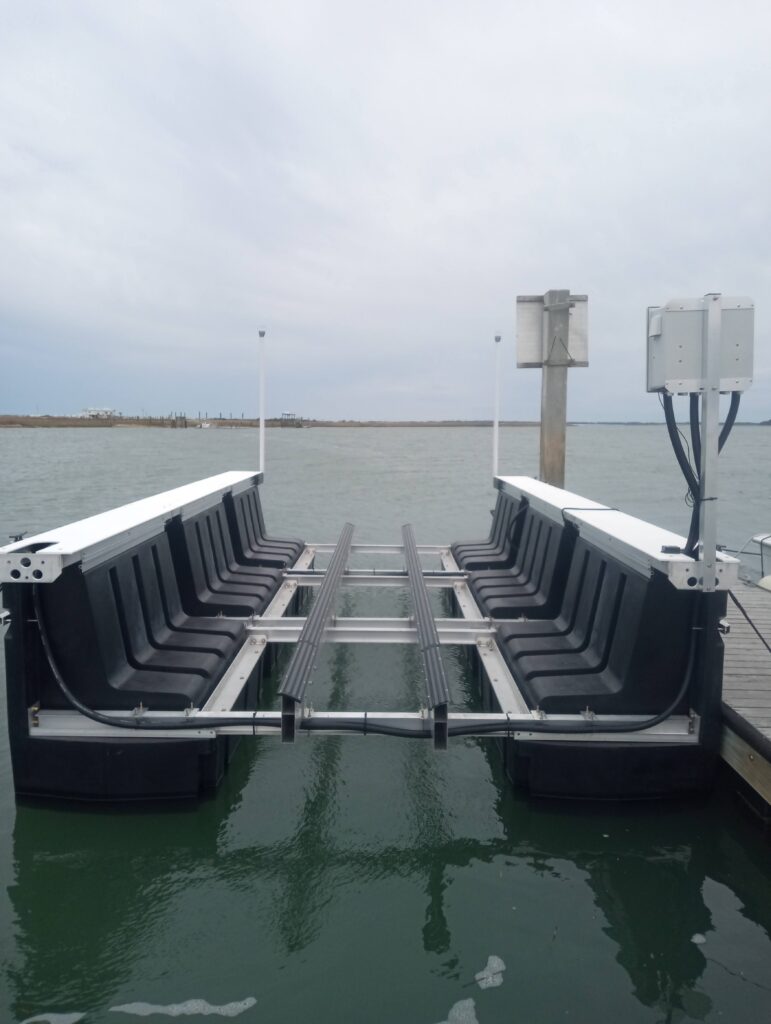
The engineering behind the TideRider by Tidewater Marine Products was intentionally built from the ground up to align perfectly with these strict statutory requirements:
- Zero Piling Footprint: The system attaches seamlessly to your existing dock or finger pier without driving permanent piles or creating structural alterations, keeping your installation entirely within the state’s environmental exemption criteria.
- Ultra-Low Profile Design: Because your boat sits nested safely inside the floating frame rather than being hoisted high into the air like a sail, it maintains a clean aesthetic that satisfies both environmental inspectors and strict HOA boards.
- Instant Portability: Unlike a permanent mechanical lift that becomes a fixed part of the real estate, the TideRider is classified as a portable marine asset. It can be easily detached and moved with you if you ever change slips, bypassing rigid permanent-structure codes.
Ultimately, you do not have to let building department bureaucracy stand between you and a dry hull. By leveraging modern industry laws and smart engineering, you can protect your boat completely within the law without the standard multi-month headache. Ensure your dock setup stays fully compliant while enjoying total peace of mind. Contact the Tidewater Marine Products team in Stuart, Florida, and discover how our fully exempt floating systems can upgrade your slip today.