
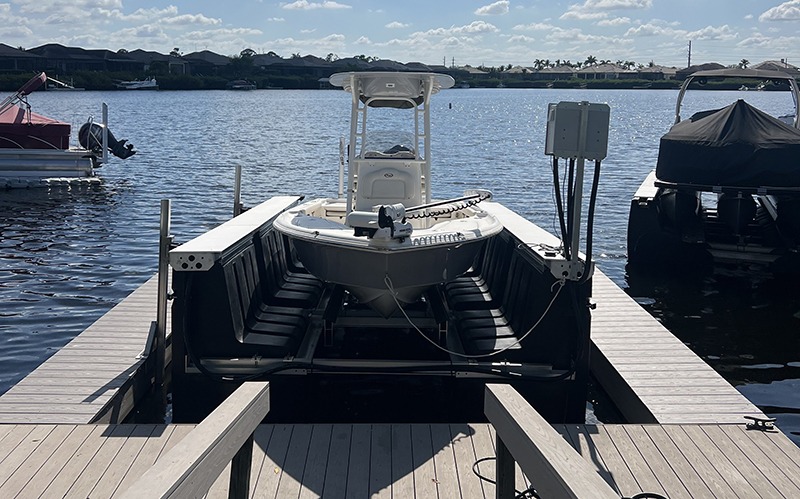
A floating lift can make your boat feel easier to own from the first week you use it. If you are figuring out how to choose floating boat lift options, the real question is not just capacity or price. It is whether the lift matches your hull, your dock setup, and the way you actually get on and off the water.
That distinction matters. A lift that looks good on paper can still create daily frustration if boarding is awkward, cleaning access is limited, or the system does not suit your drive configuration. The right floating boat lift should protect your investment while making every launch and return simpler.
How to choose floating boat lift options that fit your boat
Start with the boat itself, because that is where most good lift decisions are made. Length and weight are obvious factors, but they are only part of the picture. Hull shape, beam, deadrise, and the location of the engine or drive all affect how the boat will sit, center, and load onto the platform.
A floating lift needs to support the hull correctly without creating pressure points or a poor resting attitude. Boats with different bottoms do not behave the same way during loading. A setup that works well for one runabout may not be ideal for a stepped hull, a center console, or a vessel with a more distinctive running surface.
Drive configuration is just as important. Outboards, stern drives, and other layouts each have their own clearance and support considerations. If the lift is not engineered for a wide range of hull and drive combinations, you can end up compromising access, protection, or both. That is why versatility matters more than many buyers expect.
Think beyond storage and focus on everyday use
A lot of boat owners shop for a lift as if it is only a storage device. In practice, it becomes part of your routine every time you head out or come back in. The best choice is the one that reduces friction in normal ownership.
Ask yourself how you use the boat on a typical weekend. Do you board from the bow, side, or stern most often? Do family members or guests need stable footing when getting in and out? Do you want easy access for wiping down the hull, washing the deck, or checking underwater areas without fighting the lift design?
These are not small details. A low-profile floating lift can make boarding and disembarking much easier, especially for families, older passengers, and anyone carrying gear. It can also improve access for cleaning, which helps with long-term appearance and maintenance. If the lift adds convenience instead of creating one more step, you will feel the value every time you use it.
Loading should be predictable, not stressful
Some lift systems are technically compatible with a boat but still difficult to use in real conditions. If centering the boat feels finicky, if the hull does not settle consistently, or if approach angles demand too much correction, ownership gets old fast.
A better system guides the boat into position with less guesswork. Predictable loading is especially valuable in changing wind, current, or tide conditions common in coastal markets. You want a lift that works with the realities of waterfront use, not one that assumes perfect conditions every time.
Dock layout and waterfront conditions matter more than buyers expect
The next step in how to choose floating boat lift systems is looking at your dock environment honestly. The lift has to fit your waterfront setup, not just your boat.
Consider how much room you have around the slip or dock face, how you approach the lift, and where pilings or other structures sit in relation to the boat. The best choice often depends on available space for entry, tie-up, and passenger movement once the boat is in place.
Water movement also affects performance and user experience. In many Florida and coastal properties, conditions can shift enough that stability, durable construction, and corrosion resistance are not optional. Saltwater exposure changes what materials and hardware will hold up over time. Freshwater owners need durability too, but coastal boaters tend to see the consequences of poor material choices much faster.
This is where marine-grade construction earns its keep. A floating lift should be designed for harsh exposure and low maintenance, because no boat owner wants more waterfront upkeep than necessary.
Material quality is not a luxury feature
It is easy to focus on visible features and overlook the structure that actually determines service life. But if you want long-term value, material quality should be near the top of your list.
Look for a lift built with materials suited for both strength and corrosion resistance. Hardware, flotation components, structural supports, and contact areas all matter. A well-designed system should hold up in marine conditions without demanding constant adjustment, repair, or replacement.
Low-maintenance design is a major advantage here. The point of a floating lift is to make boat ownership easier, not to create another piece of equipment that needs constant attention. A durable system protects the boat while reducing hassle at the dock.
The cheapest option can cost more over time
This is one of the most common trade-offs buyers face. A lower upfront price can look attractive, but if the lift is harder to use, less adaptable, or built with shorter-lived materials, the long-term value often disappears.
That does not mean every owner needs the same configuration. It does mean you should weigh convenience, durability, and boat protection more heavily than sticker price alone. When a lift helps preserve hull condition, improve cleaning access, and reduce wear from in-water storage, it is doing more than parking the boat.
Choose a design that protects the boat and supports maintenance
Boat protection is the reason many owners start looking at lifts in the first place, and for good reason. Keeping the hull out of the water when not in use can help reduce growth, staining, and the wear that comes with prolonged exposure.
But lift design affects how well that protection works. Proper support, stable positioning, and useful access around the boat all play a role. If the system makes it easier to rinse, inspect, and clean the vessel, that benefit adds up over time.
This is especially valuable for owners who care about resale value. A well-kept boat almost always tells the story of how it has been stored. Choosing a floating lift that supports protection and routine care is one of the more practical ways to preserve that investment.
How to compare floating lift features without getting lost in specs
Specs matter, but they should serve the ownership experience rather than distract from it. As you compare models, focus on a few questions.
First, will the lift accommodate your specific hull and drive configuration without compromise? Second, will it make boarding, loading, and cleaning easier on a normal day? Third, is it built for the marine environment where you use it? And fourth, does the design look adaptable enough to support you over the long run, not just today?
That last point matters because many owners change boats, add accessories, or refine how they use their dock over time. A versatile platform can be a smarter choice than a narrowly matched one if flexibility is part of your waterfront plan.
One reason boaters look for engineered floating systems such as the TideRider is that versatility can remove a lot of uncertainty from the selection process. When a lift is designed to accommodate a broad range of hull and drive setups while staying low-profile and easy to use, it aligns better with the way people actually live with their boats.
When expert guidance is worth it
Even experienced boat owners can benefit from a second set of eyes when choosing a lift. There are enough variables in hull shape, dock layout, and usage patterns that a quick conversation can prevent an expensive mismatch.
Good guidance should feel practical, not overly technical. You want recommendations based on how you board, how often you use the boat, the conditions at your property, and the kind of protection and convenience you expect. That approach leads to better fit and fewer compromises.
If you are still narrowing down how to choose floating boat lift options, the best move is to think less about generic categories and more about your exact setup. The right lift should fit your boat, your waterfront, and your routine well enough that using it feels natural. When that happens, you spend less time managing the boat and more time enjoying why you bought it in the first place.