

Many premium boat owners think a wet slip is the best option. Keeping your center console or catamaran in the water means you are always ready to ride. However, calculating the true cost of a wet slip reveals massive hidden fees.
In fact, the financial drag goes far beyond your monthly marina rent. Constant salt water degrades your hull, robs your performance, and creates severe maintenance downtime. Therefore, storing your vessel on a lift eliminates these financial drains completely.
Marine Growth and the Cost of a Wet Slip
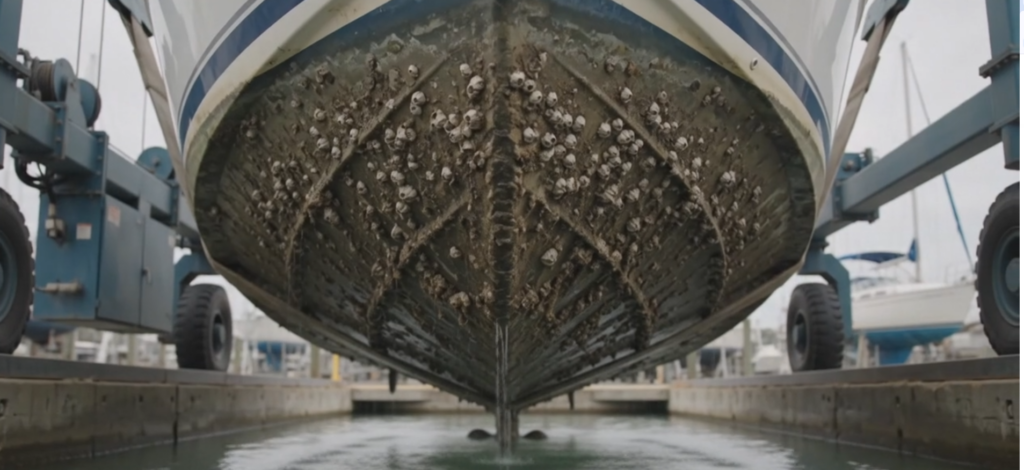
Warm coastal waters are incredibly tough on boats. As a result, barnacles, algae, and worms grow fast. Marine growth accumulates on bare fiberglass in just a few days. This growth ruins the clean hull design created by your naval architects. Consequently, this damage adds directly to the ongoing cost of a wet slip.
Specifically, fouling impacts your boat ownership in three expensive ways:
- Loss of Speed: Even minor barnacle growth disrupts water flow. Consequently, this reduces your top speed dramatically.
- High Fuel Bills: A dirty bottom creates massive drag. Because of this, your outboards must burn much more fuel to push the boat.
- Scrubbing Downtime: Keeping a hull clean requires hiring divers monthly. Alternatively, you lose valuable time by pulling the boat to pressure wash it.
Bottom Paint Deficiencies and Slip Expenses
Wet-slip tenants must use bottom paint to fight growth. Unquestionably, this paint adds directly to the ongoing cost of a wet slip. Furthermore, it creates major long-term problems. Anti-fouling paint requires expensive sanding and painting every year or two.
In addition, heavy paint permanently ruins the look of a premium gelcoat. The rough texture adds permanent drag to your running surface. As a result, this friction robs you of fuel efficiency from day one.
Moreover, paint hurts your resale value when you decide to upgrade. Discerning buyers avoid painted hulls because they worry the thick coating hides blister repairs or structural hull defects.
The Modern Gelcoat Osmosis Myth
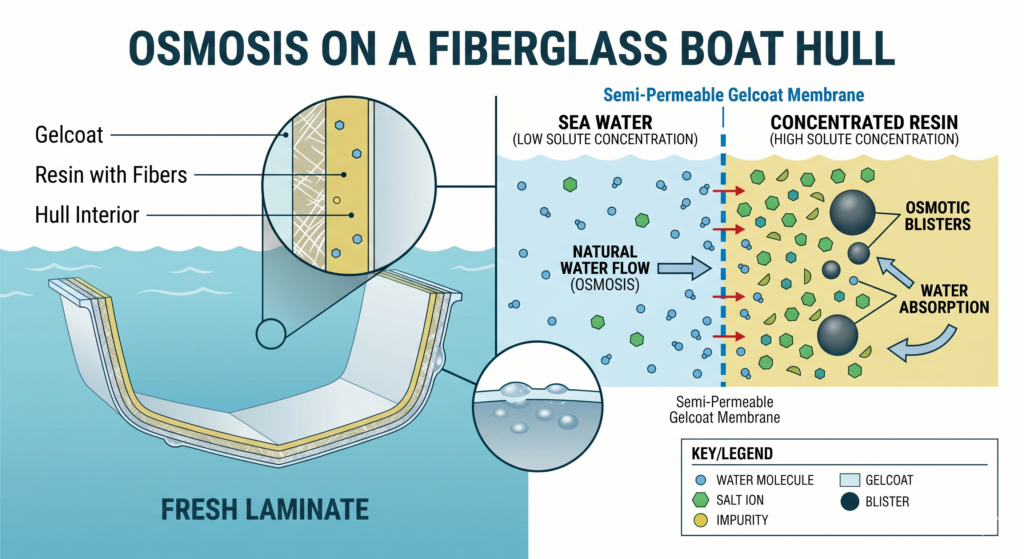
Many boaters believe modern fiberglass is fully waterproof. However, this assumption is a dangerous myth. It can artificially lower your estimated cost of a wet slip until serious damage occurs. In reality, fiberglass and gelcoats absorb water over time.
Thus Many owners think that applying standard bottom paint protects their hull from osmosis, but it does not. Here is why:
- Bottom Paint is Porous: Anti-fouling bottom paint is designed to do only one thing: stop barnacles and algae from growing on your hull. It is chemically engineered to be porous so that it can slowly leach out biocide to kill marine growth. Because it is porous, water passes right through it.
- It Traps Moisture: Not only does water pass through bottom paint, but the paint can actually trap moisture against your gelcoat, keeping it damp for months at a time and accelerating the osmotic process.
When a hull sits in water for months, moisture migrates into the tiny spaces in the laminate. This process is called osmosis. Over time, trapped water creates fluid pockets. Eventually, these pockets cause permanent hull blisters.
Fixing blisters requires grinding away the fiberglass. Next, you must dry the hull for weeks and apply expensive coats. In contrast, a lift cuts off the water supply completely. Thus, it stops osmosis before it ever starts.
Maximizing Your Waterfront Investment
Ultimately, a high-end boat lift is not a luxury expense. It is a smart financial strategy. Specifically, it offsets the hidden cost of a wet slip and protects your asset. Storing your vessel dry eliminates the need for ugly bottom paint. In addition, it stops aggressive hull scrubbing. Consequently, your running surface stays spotless for peak speed and efficiency.
In conclusion, a premium low-maintenance boat lift using advanced buoyancy engineering lowers your total ownership costs. It protects your hull from osmosis. Mainly, it keeps your investment pristine for a fast resale later.